
Content of the article.
Approximately one week ago, the COVID-19 virus reached our country. It has spread rapidly since it first appeared in January in the Chinese province of Wuhan.
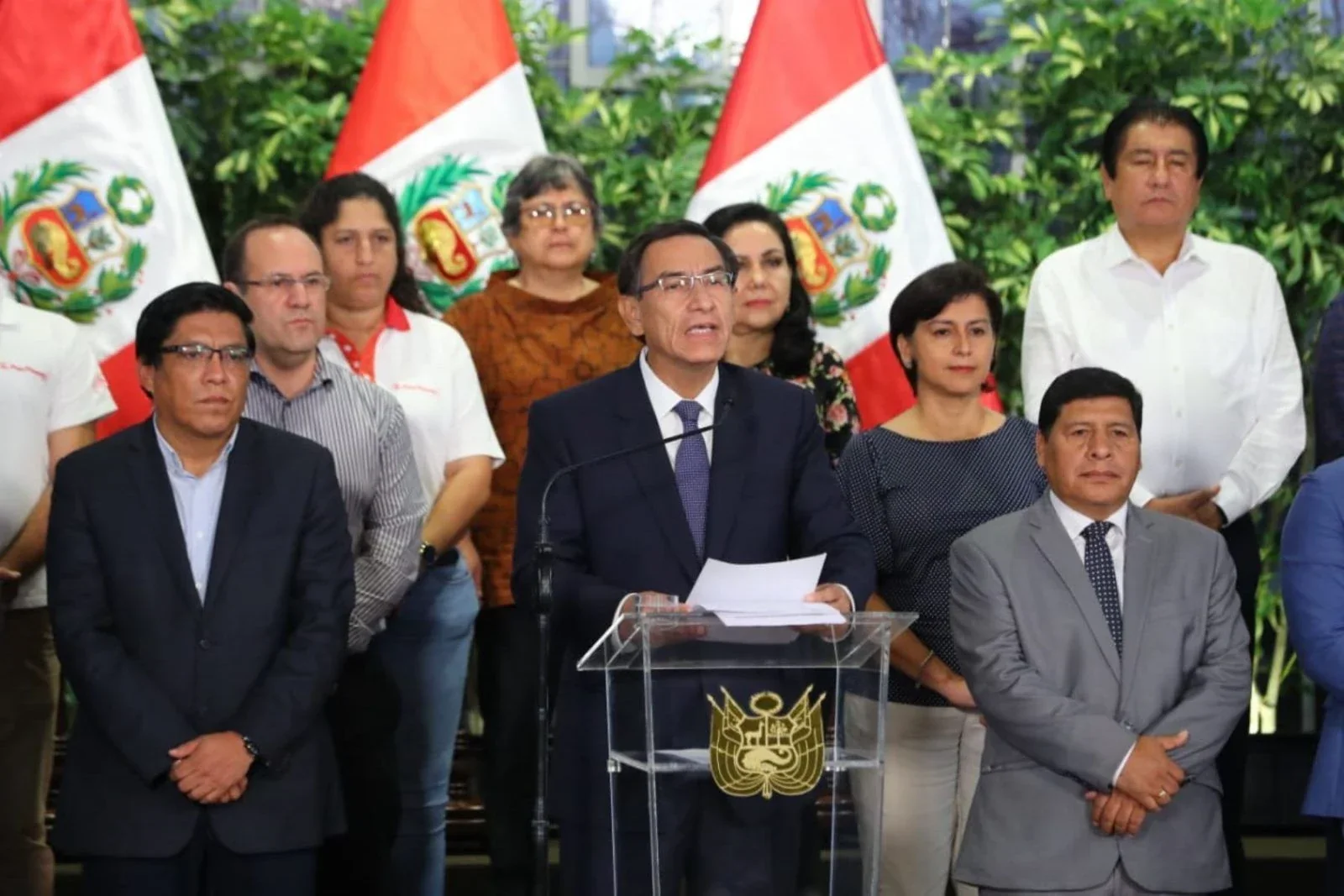
As 71 cases have now been confirmed in our country, President Vizcarra, after meeting with the competent authorities, declared a State of Emergency (regulated by Article 137(1) of the Political Constitution of Peru) for a period of 15 days. Its provisions and rules were established in two decrees.
On Supreme Decree No. 044-2020-PCM: “Supreme Decree declaring a National State of Emergency due to the serious circumstances affecting the life of the Nation as a consequence of the COVID-19 outbreak”.
This Supreme Decree formally declares a National State of Emergency for fifteen (15) calendar days and orders mandatory social isolation (quarantine) due to the serious circumstances affecting the life of the Nation as a consequence of the COVID-19 outbreak.
With respect to persons with disabilities, there is a brief reference both in the Address to the Nation and in Article 4.1 of Supreme Decree No. 044-2020-PCM, which establishes mandatory social isolation for the duration of the measure, while allowing people to travel on public roads in order to provide or obtain essential services and goods such as:
- Acquisition, production and supply of food, including its storage and distribution for sale to the public.
- Acquisition, production and supply of pharmaceutical products and basic necessities.
- Attendance at health centres, services and facilities, as well as diagnostic centres, in emergency cases.
- Employment, professional or business activity necessary to guarantee the services listed in Article 2 (Access to public services and essential goods and services).
- Return to the place of habitual residence.
- Assistance and care for older persons, children, adolescents, dependent persons, persons with disabilities or persons in vulnerable situations.
- Financial institutions, insurance and pension services, as well as supplementary and related services that ensure their proper operation.
- Production, storage, transport, distribution and sale of fuel.
- Hotels and accommodation facilities, solely for the purpose of complying with quarantine.
- Media outlets and telephone service centres (call centres).
- Public-sector workers who, exceptionally, provide services necessary for actions related to the health emergency caused by COVID-19 may travel to their workplaces on a restricted basis.
- As an exception, in the case of productive and industrial sectors, the Ministry of Economy and Finance, in coordination with the competent sector, may include additional activities that are strictly indispensable beyond those listed in the preceding paragraphs, provided they do not undermine the national state of emergency.
- Any other activity analogous in nature to those listed in the preceding subparagraphs or that must be carried out due to unforeseeable circumstances or force majeure.
In addition, regarding borders, Article 8.1 of this decree orders the complete closure of the borders, suspending international passenger transport by land, air, sea and river. This measure enters into force at 11:59 p.m. on Monday, 16 March 2020 and, under Article 8.3, freight and goods transport is not included in this temporary closure.
For more information about Supreme Decree No. 044-2020-PCM, click the following box:
Supreme Decree No. 044-2020-PCM
On the other hand, in his Address to the Nation, President Vizcarra stated the following: “We have the duty and obligation to protect, in particular, the most vulnerable people, such as our older adults. We must do so in our homes and throughout the country. To this end, we are authorising a transfer of 40 million soles to the Ministry of Development and Social Inclusion for the organisation and development of a Support Network for High-Risk Older Adults and Persons with Severe Disabilities. In this regard, the Ministries of Health and of Women and Vulnerable Populations, as well as regional and local governments, will also have resources to finance a home-visit and individual follow-up service in their respective jurisdictions. In addition to addressing the health problem, the Government is committed to helping and accompanying the most vulnerable families. That is why we are making sure that all of us can successfully get through this difficult period”. This duty to protect older adults and persons with severe disabilities is regulated by the other decree.
On Emergency Decree No. 026-2020: “EMERGENCY DECREE ESTABLISHING VARIOUS EXCEPTIONAL AND TEMPORARY MEASURES TO PREVENT THE SPREAD OF CORONAVIRUS (COVID-19) IN THE NATIONAL TERRITORY”.
According to Article 1, the purpose of this Emergency Decree is to approve additional extraordinary measures that make it possible to adopt preventive and response actions to reduce the risk of spread and the health impact of the disease caused by COVID-19 throughout the national territory, as well as to help reduce the impact on the Peruvian economy arising from the high risk of nationwide spread of the virus.
With respect to persons with disabilities, reference is made in Title I on Measures to Reduce the Risk of Spread and the Health Impact of COVID-19, where Article 2, on authorisation for the Ministry of Development and Social Inclusion to organise and develop a Support Network for High-Risk Older Adults and Persons with Severe Disabilities provides for authorisation of a budget modification at the institutional level, up to the amount of S/ 40,000,000.00 (FORTY MILLION AND 00/100 SOLES) in favour of the Ministry of Development and Social Inclusion, for contracting the services necessary to organise and develop a Support Network for High-Risk Older Adults and Persons with Severe Disabilities. The beneficiary ministry must distribute this amount among the Ministry of Health, the Ministry of Women and Vulnerable Populations, Regional Governments and Local Governments, determined mainly by population size, to finance the services required to organise and implement a home-visit and individual follow-up service in their jurisdictions..
In addition, within a period not exceeding 3 calendar days from 15 March, the Ministry of Development and Social Inclusion, by Supreme Decree, must publish the design of the Support Network for High-Risk Older Adults and Persons with Severe Disabilities..
On the Support Network for High-Risk Older Adults and Persons with Severe Disabilities.
According to the decree, this Network must be coordinated by the Ministry of Development and Social Inclusion together with the Ministry of Health, the Ministry of Women and Vulnerable Populations, Social Health Insurance (EsSalud), the National Superintendency of Health (Susalud), the Armed Forces and Police Health Services, Comprehensive Health Insurance (SIS), Regional Governments and Local Governments. It will be financed from the budget of the Ministry of Development and Social Inclusion, with the possibility of drawing on additional Public Treasury funds.
On the Named Register of High-Risk Older Adults and Persons with Severe Disabilities.
The Ministry of Development and Social Inclusion will have access to and may process data held in personal-data databases administered by the Ministry of Health, the Ministry of Labour and Employment Promotion, the Ministry of Transport and Communications, EsSalud, Susalud, CONADIS, RENIEC, SIS, INS, INEI and other public bodies in order to create the named register.
On the intervention of the National Social Inclusion Action Platforms Programme (PAIS).
Under the decree, PAIS will provide advice and technical assistance for territorial management by Local Governments in implementing the Support Network for High-Risk Older Adults and Persons with Severe Disabilities.
For more information about Emergency Decree No. 026-2020, click the following box:
We also provide the video of the presidential address uploaded by the TVPerú Noticias channel (automatic captions have now been enabled by this YouTube channel):
President Vizcarra’s Address to the Nation on the State of Emergency in response to COVID-19.
Video credit: TVPerú Noticias.
The Address to the Nation on the State of Emergency did not have real-time captions, a sign-language interpreter or other accessibility measures. Nevertheless, we attach a transcript of the Address to the Nation, although all accessibility measures should have been provided so that the message could reach all Peruvians.
If you would like to read the transcript of the Address to the Nation, click the following box: