

AbstractWhat does disability mean in political terms? What is an employment quota? Is it enough for a person with a disability to reach Congress in order to achieve parity? This article explores these questions through different authors with diverse perspectives on how disability should be addressed politically. It also reflects on the deliberative process surrounding the 2012 Law on Persons with Disabilities, examining the principal actors and the positions they adopted during that process.
Keywords: Law, disability, politics, Congress, State.
Introduction:
This article seeks to describe the principal theoretical positions concerning disability in the political sphere and to identify the main actors and positions involved in the enactment of the Law on Persons with Disabilities during the early period of Ollanta Humala’s administration (2011–2016). The law emerged in a context of internal and external political conflict, with the State opening multiple fronts with various actors. Throughout the discussion, the article also seeks to encourage debate and future research on the relationship between disability and the State. Primary sources consist mainly of official documents from the principal actors, namely CONFIEP and the Congress of the Republic; secondary sources include literature on political theory and disability.
The politics of disability: Theoretical notes.
As a starting point, John Rawls’s neo-contractualism can be used to question the liberal social contract consolidated in Western democracies. This contract is an abstract agreement between society and the State under which the State guarantees liberty and rights, allowing individuals to pursue their personal ends spontaneously. On this basis, if the Peruvian State provides political security to persons with disabilities—voting rights, participation and civic rights—they should be able to act independently and pursue their goals predictably. Yet this is clearly insufficient, because persons with disabilities encounter limitations in different areas of public and private life in which the State’s role remains unsatisfactory. Rawls’s proposal is therefore useful for understanding disability policy because equality and liberty do not by themselves produce justice; justice must also be exercised through the State, which possesses the tools of law and has universal reach. Rawls is optimistic about reason, through which individual differences and capacities are recognized and agreements can be reached. The rights of persons with disabilities could therefore be addressed substantively, but this would still be partial because excessive confidence in “reason” risks overlooking psychosocial and cognitive disabilities in light of social prejudice. By contrast, Nozick’s libertarian position views the State as an entity that cannot deliver justice because its policies are by nature imposed through force and therefore threaten individual liberty.
Another useful approach for discussing disability politics is Hannah Arendt’s republicanism. Arendt recognizes both institutional and non-institutional forms of political participation in which different opinions are expressed, accountability is exercised and levels of representation are gathered; these are useful mechanisms for guaranteeing a full democracy. The central idea is citizen initiative, but this is problematic because participation requires a context in which people are genuinely able to take part, while barriers and bottlenecks may prevent substantive participation. Citizens clearly have varied interests, and material incentives may be used to encourage participation; because this is a recurring practice, it need not in itself be an obstacle. Arendt also explains that the consolidation of totalitarian regimes in Europe was facilitated by the absence of social bonds produced by isolation and atomization, which denied identity and contributed to dehumanization. Plurality is therefore fundamental because people hold radically different viewpoints and experiences and interact with one another, rejecting the idea of a messianic leader.
Viewed through these lenses, disability politics can be understood through the spontaneous initiatives of citizens with disabilities and their allies, which need not originate within the State or be formulated as legal reforms. In a country marked by State weakness—including inadequate infrastructure and insufficient reasonable accommodation in public schools, health services, identity services, justice and other areas—citizen participation acquires particular vitality and relevance, leading to the formation of civil-society organizations around disability. The National Union of the Blind, the Association of Relatives of Persons with Intellectual Disabilities, the Peruvian Down Syndrome Society, the Association of the Deaf of Peru and others are civil-society bodies responding to concrete demands from groups differentiated by gender, occupation, age or relational ties such as family or friendship with a person with a disability.
These initiatives do not remain only at the organizational level; they can also affect how public policies are conceived and implemented. Prince (2008) discusses city governance, noting that urban planning has historically failed to consider persons with disabilities and has instead produced responses based on “charity” and medicalization. To counter this perspective, mobility can be treated as a public-policy principle that enables critical scrutiny of urban management. In cities, as Foucault suggests, there are dark and disorderly areas, and failures in social arrangements to accommodate people’s needs generate physical and cultural barriers that consolidate inequality. One method for evaluating how inclusive a city is for persons with disabilities is to examine how the environment restricts a person’s participation in their neighborhood, public transport and access to public spaces such as schools, libraries, universities, parks and concerts. Prince ultimately argues for a politics of difference that seeks political representation for persons with disabilities and celebrates their differences, encouraging the creation of varied spaces and facilitating interaction. A politics of difference departs from strict equal treatment typical of classical liberalism because it recognizes a history of persistent inequality that will not resolve itself spontaneously. At the same time, it can be reconciled with liberalism because it does not grant preferences to specific individuals but addresses a sector of the population. Both liberalism and republicanism should give everyone the opportunity to improve their situation; this is the purpose of inclusion in the political system.
Regarding forms of representation, Franceschet classifies them as descriptive representation (presence in the legislative arena), substantive representation (promotion of rights) and symbolic representation (whether the public feels represented by legislators). Representation of persons with disabilities in politics can therefore be understood at three levels. The first is the presence of legislators with disabilities who participate in Parliament and whose presence can itself support the adoption of reasonable accommodations in the building. Peru has a history of persons with disabilities entering the legislative arena, including Gian Carlo Vacchelli from Fujimorismo and candidate Jorge Balbín Cóndor from the Humanist Party. Yet, as with women, LGBT people, Indigenous communities and other groups, the mere presence of legislators may not translate into substantive equality policies. Women legislators, for example, have different interests and do not uniformly support gender-equality policies. Similarly, having legislators with disabilities does not guarantee policies favorable to persons with disabilities; the question goes beyond voting alone. At the second level—substantive policy formulation—the process is inherently complex, involving many actors, lengthy approval procedures and delays in regulation, so individual actors cannot by themselves produce equality policy. Third, and most difficult to assess, is whether persons with disabilities actually feel represented by legislators with disabilities. Research on this question would require surveys of specific groups, focus groups and in-depth interviews. This is especially relevant in cases such as that of Congressman Michael Urtecho, who was expelled from Congress in 2013 for illicit enrichment and violations of labor laws affecting his employees. The case generated broad rejection within the disability community and prompted organizations to publicly distance themselves from him.
Regarding identity groups, Gutmann provides a definition that helps explain the nature of political participation by persons with disabilities. In general, an identity group seeks self-recognition and recognition by others as belonging to that group, while the identity does not monopolize other underlying identities; members coordinate around a shared political objective. Persons with disabilities can be understood as belonging to an ascriptive category involving traits that do not usually change over time and are related to physical or personal characteristics. In that sense, disability may be discussed alongside categories such as gender, ethnicity or sexual orientation, allowing relationships among these groups to be considered in processes of negotiation with the State. From the perspective of identification, it is also proposed that all individuals, regardless of their ascriptive identity, can live a moral life if they identify with disadvantaged people and contribute to just causes. This is a strongly normative and idealistic view.
In conclusion, this section has sought to provide a theoretical background for understanding disability at the political level, emphasizing key issues such as participation, representation, public policy and their relationship with broader normative traditions. It has also sought to propose directions for future research on politics and disability, a field that has not been sufficiently developed in Peru and deserves particular attention because of the complexity of the situation and the policies required to achieve full and practical equality.
A case for analysis: the 2012 Law on Persons with Disabilities.
From 2012, when a new Law on Persons with Disabilities was enacted, various actors directly affected by the measure—especially business associations—expressed objections. The president of CONFIEP at the time, Humberto Speziani, argued that the law could only be complied with superficially because companies with more than 50 employees would create artificial positions merely to fill the 3% quota for workers with disabilities. CONFIEP was one of the actors most involved in deliberations on the law, while disability associations and human-rights groups played a more secondary role. In November of the same year, however, Alberto Andreu, Global Director of Public Affairs at Telefónica, expressed optimism in an interview about business activities designed to close social gaps, arguing that they could become highly profitable in Latin America because the region was growing faster than Europe or the United States.[1].
One year after the law was enacted, the president of CONFIEP published an article highly critical of the legal measure[2]. The article rejected views of disability as a tragedy deserving only compassion and observed that trade liberalization had made companies more competitive and led them to select staff on the basis of objective abilities, such that disability per se should not be a criterion for rejecting an applicant. It argued that the Law on Persons with Disabilities merely generates sub-competitive contracts and places companies at a disadvantage because they are fined for failing to comply with the quota, while criticizing the State for not enforcing the same law with respect to its own employees. Humberto Speziani[3] used arguments characteristic of Nozickian libertarianism, viewing the law as essentially coercive and as failing to solve the underlying problem. He proposed that the key should be the “conviction” of companies to hire more qualified persons with disabilities for the positions offered. He also argued that persons without disabilities would be discriminated against because wages would fall overall in order to meet the quota and existing employees might have to be dismissed. Finally, he maintained that disability should be addressed from an early stage of life by improving the quality of education, which would then support employment in adulthood. He also reported a meeting with CONADIS at which the business association stated that it sought creative proposals rather than solutions imposed by decree.
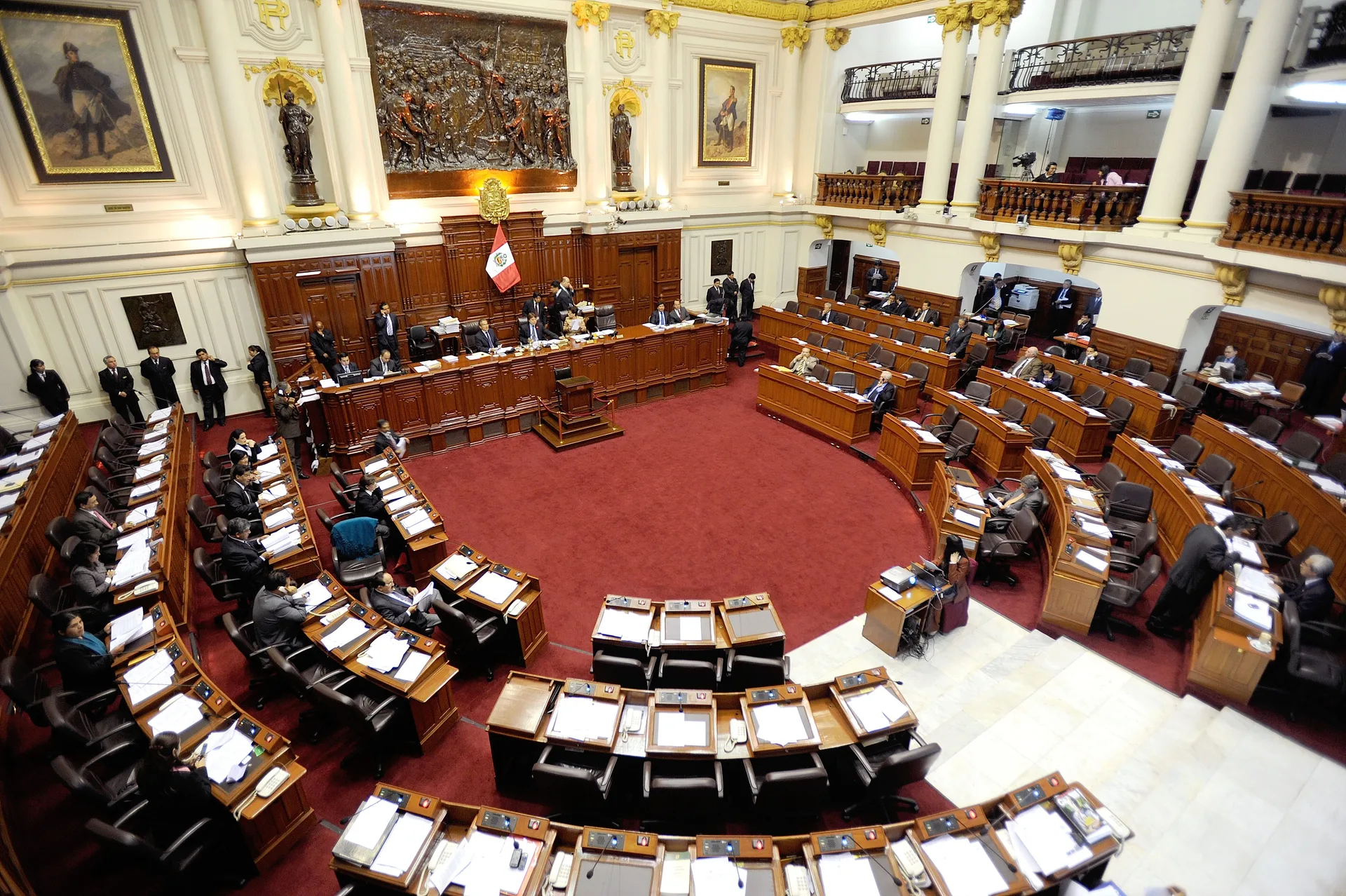
During the year in question, the Congressional Committee on Social Inclusion and Persons with Disabilities was chaired by Jhon Reynaga (President), from the Nationalist Party; Gian Carlo Vacchelli (Vice-President), from Fujimorismo; and Michael Urtecho (Secretary, later removed), from Solidaridad Nacional. Its members came from several parties, particularly Fuerza Popular (2), Dignidad y Democracia (2, following the split in the governing bloc after the Conga mining conflict), Perú Posible (2), the Acción Popular–Frente Amplio bloc (1, Rosa Mavila), and the Nationalist Party (1).
Regarding the process of adopting the law in 2012, Congress approved the measure almost unanimously. Despite a history of both justified and unjustified absenteeism, it is notable that legislators who could not attend submitted notice expressing their vote, something not especially common in congressional practice. The Executive’s comments were mainly legal, focusing on future interpretations in civil law. One important issue was the Executive’s concern about CONADIS’s sanctioning power in relation to local governments, on the ground that the body might assume powers outside its jurisdiction; where municipalities failed to implement reasonable accommodations, the Executive proposed limiting the matter to sanctions relating to urban adaptation under Law 27920. It therefore sought to prevent CONADIS from having sanctioning authority and instead confine it mainly to oversight and reporting State entities that failed to comply with the rules. The Executive also questioned the requirement that privately managed events, such as concerts or sporting events, offer persons with disabilities a 20% discount on ticket prices for up to 10% of tickets. It regarded this as unconstitutional because of its impact on freedom of enterprise, notwithstanding legal precedent in earlier disability legislation. The proposed employment quotas were also criticized on the view that they exceeded Peru’s international commitments. Adopting a position very similar to that of the CONFIEP president, the Executive argued that full labor inclusion of persons with disabilities could be promoted through training, donations, sponsorship and contracts with persons with disabilities for the supply of goods and services. It also objected to eliminating age limits and establishing affirmative measures among different types of disability, considering this inconsistent with fundamental principles of the Ministry of Women and Vulnerable Populations.
Despite opposition from business interests and the Executive, the law retained important elements, including the role of CONADIS, which preserved the power to bring compliance actions and to impose and coercively collect fines (Article 64). It also retained the right of duly accredited persons with disabilities to reduced prices for a percentage of tickets to public events (Article 44), as well as the central employment quotas of 5% in the State and 3% in private companies with more than 50 employees (Article 49.1). Does this represent a failure of business power to penetrate public policy, or can the apparent autonomy of the State be explained by other factors? The Humala government was characterized by strong influence from business interests (Durand 2016), including a “revolving door” through which businesspeople and technocrats moved into senior State decision-making positions (Arce 2005), especially in the mining sector. Yet there were also cases in which de facto business power was challenged, such as the moratorium on genetically modified crops and the so-called “pulpín” labor law (Urteaga 2017), owing to factors including the degree of cohesion among private actors and the existence of a strong opposing coalition. At first glance, business cohesion in the disability-law debate appears to have been moderate: CONFIEP’s presidency played an active role, while certain executives supported “social” measures. The strength of the opposing coalition was also moderate, with support in Congress but a secondary role for disability associations. Beyond these internal factors, did the 2012 Conga mining conflict divert business actors’ attention and resources toward that issue, as well as the Espinar and Tía María conflicts, thereby creating favorable space for the law? Future research reconstructing the process through media sources and interviews with participants could develop arguments capable of answering these complex questions.
Balance.
The debate about disability is, above all, highly complex. At the theoretical level, liberalism and republicanism offer very different views on how to pursue the objective of substantive inclusion of persons with disabilities. Connecting disability with other traditions, such as feminisms or the politics of difference, also creates a particularly valuable dialogue. Considering the successes and failures of gender-equality policies in different contexts provides tools for achieving an appropriate balance in disability-inclusion policies by learning from prior experience. Regarding political representation, it would be useful in Peru to research the electoral preferences and levels of political satisfaction of persons with disabilities, a subject that has received limited attention in electoral studies. Finally, the debate surrounding the Law on Persons with Disabilities was controversial and attracted the attention of major political actors in the Peruvian context. Because the Executive presented arguments very similar to those of the president of CONFIEP, the question remains whether this was a case of State capture or, alternatively, a situation of genuine State autonomy.
Bibliographic references:
[1] Gestión, 2012. Available at: https://gestion.pe/tendencias/management-empleo/alberto-andreu-america-latina-lider-nuevas-tendencias-rse-24488. Reviewed on 15/08/2017
[2] CONFIEP, 2013. Available at: http://www.confiep.org.pe/articulos/comunicaciones/inclusion-y-discapacidad. Reviewed on 15/08/2017.
[3] President of CONFIEP from 2011 to 2013.
Bibliography:
Arce, M. (2005). Market reform in society: Post Crisis Politics and Economic Change in Authoritarian Peru. University Park: Pennsylvania University Press
Arendt, H. (1996). La Condición Humana. Madrid, Paidós.
Durand, F. (2016). Cuando el poder extractivo captura al Estado: Lobbies, puertas giratorias y paquetazo ambiental en Perú. Lima, Oxfam.
Franceshet, S. (2008). ¿Promueven las cuotas de género los intereses de las mujeres?: El impacto de las cuotas en la representación sustantiva de las mujeres”. En Ríos-Tobar, M. (editora), Mujer y Política: El impacto de las cuotas de género en América Latina. Santiago de Chile, Catalonia.
Gestión (2012). Confiep: Ley de la Persona con Discapacidad generaría sobrecostos a las empresas. Link: http://gestion.pe/empresas/confiep-ley-persona-discapacidad-podria-generar-sobrecostos-empresas-2055107
Gutmann, A. (2008). La identidad en democracia. Buenos Aires, Katz Editores.
Hernández, A. (2002). El pensamiento republicano frente a los déficit de la democracia liberal. En Hernández, A (compilador), Republicanismo Contemporáneo: Igualdad, Democracia Deliberativa y Ciudadanía. Bogotá, Siglo del Hombre Editores.
Ley N° 29973. Ministerio de la Mujer y Poblaciones Vulnerables del Perú, Lima, Perú, 13 December 2012.
Nozick, R. (1988). Anarquía, Estado y Utopía. Ciudad de México, FCE
Prince, M. (2008). Inclusive city life. Persons with disabilities and the Politics of Difference. En Disability Studies Quarterly Volumen 28 N°1.
Rawls, J. (1993). Teoría de la Justicia. Madrid, Fondo de Cultura Económica.
Rawls, J. (1986). Justicia como Equidad. Madrid, Tecnos.
Rawls, J. (1996). El liberalismo político. Barcelona, Crítica.
Urteaga, M. (2017). Cuando los poderosos pierden: Poder empresarial y regulación del cultivo de semillas transgénicas en el Perú. Tesis de Licenciatura en Ciencia Política y Gobierno. Lima: PUCP.
Important links:
- http://www4.congreso.gob.pe/comisiones/2012/inclusion/integrantes.asp
- http://www.confiep.org.pe/articulos/comunicaciones/alberto-andreu-america-latina-es-el-lider-de-las-nuevas-tendencias-de-rse
- http://www.confiep.org.pe/articulos/comunicaciones/inclusion-y-discapacidad
- http://www2.congreso.gob.pe/Sicr/TraDocEstProc/Expvirt_2011.nsf/vf07web/7CFCFEA05E67C6F60525792E0050921C?opendocument