
Content of the article.
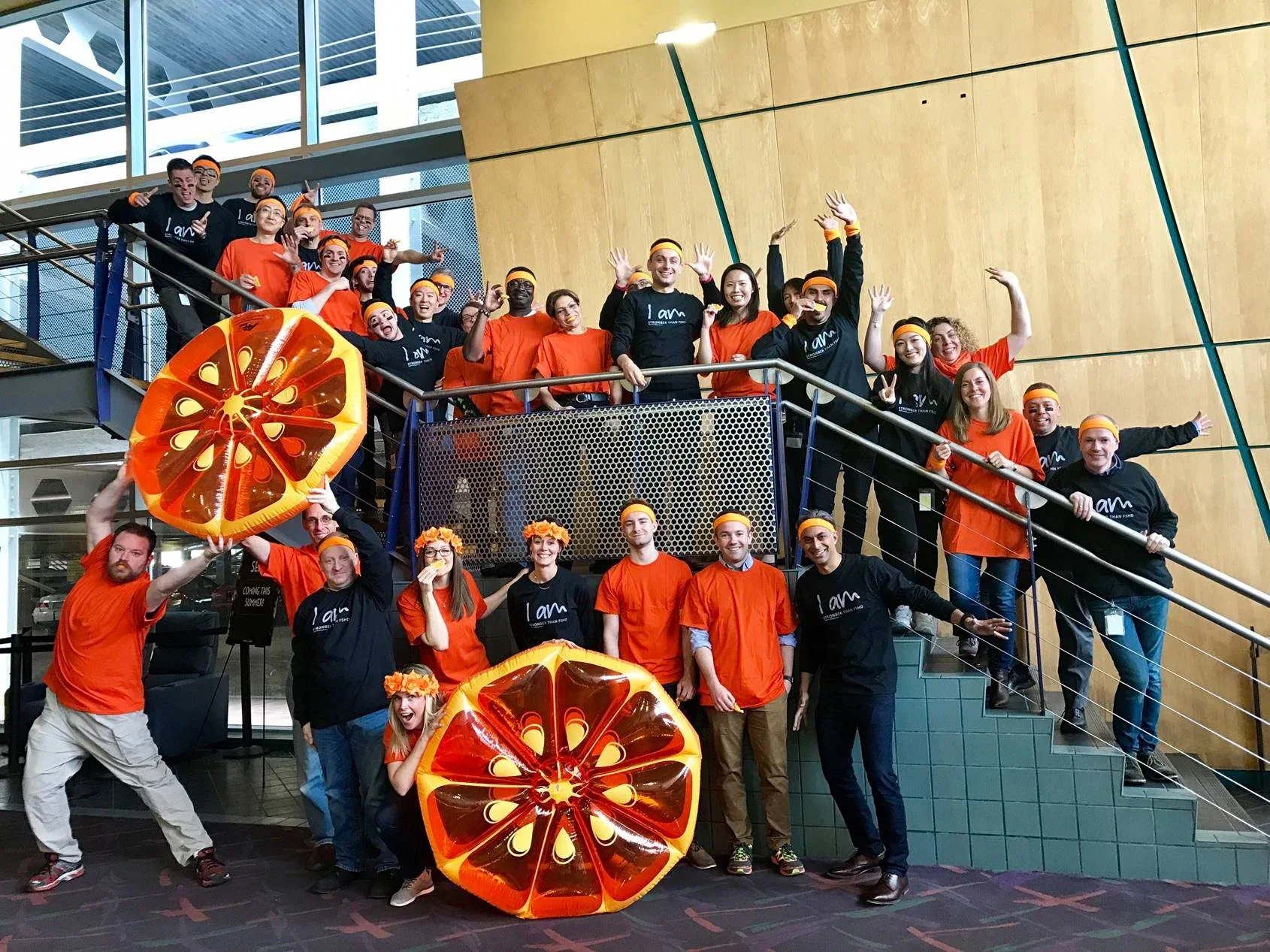
20 June marked World Facioscapulohumeral Muscular Dystrophy Day (hereinafter, FSHD), whose main purpose is to raise public awareness of this rare neuromuscular disease.
For this reason, at AIEDI we join in supporting all people living with Facioscapulohumeral Muscular Dystrophy (FSHD) and their families. We also want to highlight the need to increase awareness of the disease’s symptoms and epidemiology and to call for an expansion of clinical research on FSHD in Peru.
¿A what do we mean by facioscapulohumeral muscular dystrophy?
Muscular dystrophy is a group of diseases characterised by four criteria: 1) primary myopathy, 2) a genetic basis, 3) progressive evolution and 4) degeneration of muscle fibres. The most common forms include pseudohypertrophy of the calf and deltoid muscles (Duchenne muscular dystrophy, DMD), Becker muscular dystrophy, Emery-Dreifuss muscular dystrophy (EDMD), limb-girdle muscular dystrophy (LGMD), facioscapulohumeral muscular dystrophy (Landouzy-Dejerine), oculopharyngeal dystrophy, rod or nemaline myopathy, and myotonic dystrophy (Baust, 2008). Their main characteristic is progressive muscle weakness.
As noted above, we focus here on FSHD, which is the third most common cause of dominant muscular dystrophy and affects approximately one in 20,000 people. It may present at any time between roughly 3 and 60 years of age[1] and manifests as asymmetric facial, scapular or humeral paresis. As it progresses, some people may develop marked gait instability (Rappoport et al., 2013). Approximately 15–20% of people with FSHD will therefore require biomechanical aids such as wheelchairs or walking sticks for mobility. In simple terms, paresis refers to progressive muscle weakness affecting the face, making it difficult to close the eyes, whistle or puff out the cheeks; the shoulders, making it difficult to lift objects or raise them overhead; and the lower limbs, with loss of pelvic muscle strength. This may mean that the person requires support or personal assistance for everyday activities.
FSHD is a rare disease, but what do we mean by rare diseases? These are diseases that individually occur infrequently in the population but, taken together, affect a substantial number of people.[2]In this regard, the WHO indicates that nearly 7% of the world’s population is affected by some type of rare condition. The Mencía Foundation similarly states: “Today there are more than 7,000 diseases considered rare, affecting 30 million citizens in Europe alone.”[3]From a clinical perspective, it is therefore important to make clear that rare diseases are characterised by their impact on the quality of life of affected people and, in some cases, may lead to intellectual or physical disability.[4].
Research on FSHD is currently being conducted; however, in our country there is still very little practical research activity. This represents a major challenge given the low frequency of the disease and the risks associated with any surgical intervention (Losa et al., 2010).
For this reason, we encourage the promotion and development of more research projects. In Peru, for example, Clínica San Juan de Dios has a modern facility unique in the country known as the “gait laboratory”, which enables precise diagnosis of walking problems and supports planning of the most appropriate treatments for each case; the Gowers sign is a common sign in DMD. Other countries such as Italy are also combining efforts to research the epigenetics of FSHD (the study of mechanisms that regulate gene expression without modifying the DNA sequence). One such project is called “inter-FSHD-epigen”[5] and is led by research coordinator Dr Davide Gabellini with the support of the San Raffaele del Monte Tabor Foundation – Division of Regenerative Medicine, Stem Cells and Gene Therapy (DMR) and the Department of Biotechnology of IRCCS San Raffaele Hospital. The project is funded through the Institut National de la Santé et de la Recherche Médicale (ERARE-2)[6] in France. Another notable research project is the United Kingdom study led by Professors Kate Busby and Volker Straub, members of the John Walton Muscular Dystrophy Research Centre at the Institute of Genetic Medicine, entitled “Accelerated treatments for neuromuscular diseases”.[7].
International cooperation is therefore a key factor in addressing the need for comprehensive development of clinical research into these conditions. Such collaboration among associations, companies, foundations and scientific academic societies seeks to promote better work in early diagnosis and in the innovation of treatments and medicines.[8]For example, the International Rare Diseases Research Consortium (IRDiRC)[9] brings together government and international non-profit funding bodies, companies (including pharmaceutical and biotechnology companies), patient-advocacy organisations and scientific researchers to promote international collaboration and advance rare-disease research worldwide. It is important to note that the Consortium has global coverage and involves stakeholders from Africa, Asia, Australia, North America and Europe.
Finally, it is important to note that current treatment for FSHD focuses on preventing stiffness and joint pain through passive mobilisation and analgesics; the earlier therapeutic intervention begins, the better the outcomes are likely to be. Physiotherapy plays a crucial role. When provided regularly, usually weekly (one or two sessions per week according to need), and adapted to muscle weakness and/or contractures, it helps preserve joint flexibility and can also reduce pain, especially in the lower back and lumbar region. It should be passive (movements performed by the physiotherapist rather than by the person with FSHD), or use active assistance (the physiotherapist helps the person perform the requested movements), so as not to exhaust the muscles. Physiotherapy should not fatigue the person; its purpose is to help preserve the movements needed for daily activities and personal development.
Bibliographic references:
[1] The Orphanet portal notes that the clinical description of FSHD includes manifestations such as facial weakness (difficulty whistling, smiling and closing the eyes), while the main manifestation is shoulder involvement (difficulty raising the arms, winged scapulae and sloping shoulders). Available at: https://www.orpha.net/consor/cgi-bin/OC_Exp.php?Lng=ES&Expert=269 (last accessed on 18 June 2020)
[2] ¿Qué son las enfermedades raras o pocos frecuentes? Véase en: https://enfermedades-raras.org/index.php/enfermedades-raras. (last accessed on 22 June 2020).
[3] http://www.fundacionmencia.org/noticias/la-lucha-contra-las-enfermedades-raras-esta-en-los-genes/. (last accessed on 22 June 2020).
[4] Una visión general sobre las enfermedades raras. https://www.pediatriaintegral.es/publicacion-2014-10/una-vision-general-sobre-las-enfermedades-raras/ (last accessed on 22 June 2020).
[5] Orphanet. Retrieved from: https://www.orpha.net/consor/cgi-bin/ResearchTrials_Networks.php?lng=ES&data_id=103243&Nombre%20del%20proyecto%20de%20investigaci%F3n=inter-FSHD-epigen--An-international-effort-to-understand-FSHD-muscular-dystrophy-epigenetics&title=inter-FSHD-epigen:%20An%20international%20effort%20to%20understand%20FSHD%20muscular%20dystrophy%20epigenetics&search=ResearchTrials_ResearchProjects_Simple (last accessed on 20 June 2020).
[6] ERARE-2. Retrieved from: http://www.erare.eu/project. E-RARE is a consortium created to connect responsible funding organisations and ministries, pooling scarce resources for rare-disease research and enabling many researchers to participate in transnational projects through Joint Transnational Calls (JTCs). At present, only a few European countries fund rare-disease research through specific programmes. Funding collaborative transnational research is therefore one of the most effective joint activities for improving cooperation among scientists working on rare diseases in Europe and beyond and for reducing fragmentation in this field.
[7] TREAT N-MD. Retrieved from: https://treat-nmd.org/. TREAT-NMD is a specialised network in the neuromuscular field that provides tools to help ensure that the most promising new therapies reach patients as quickly as possible. Since its launch, the network has focused on developing the mechanisms that industry, clinicians and scientists need to deliver novel therapeutic approaches and establish better standards of care for people with neuromuscular conditions worldwide.
[8] ¿Hacia dónde vamos? Apuntes de las enfermedades raras y su futuro en la investigación clínica, a propósito del caso peruano. Retrieved from:
[9] IRDiRC. International Rare Diseases Research Consortium: https://irdirc.org/about-us/ (last accessed on 18 June 2020).
Bibliography:
Baust, J. (2008). Distrofia muscular (DM). In Toma de Decisiones en Anestesiología (Cuarta edición, Issue Dm). Elsevier España, S.L. https://doi.org/10.1016/b978-84-8086-334-6.50055-9
Iosa, M., Mazzà, C., Pecoraro, F., Aprile, I., Ricci, E., & Cappozzo, A. (2010). Control of the upper body movements during level walking in patients with facioscapulohumeral dystrophy. Gait and Posture, 31(1), 68–72. https://doi.org/10.1016/j.gaitpost.2009.08.247
Rappoport, J., Figueroa, M., Albán, M., Silva, J. J., & Carrasco, J. (2013). Abdominal wall plasty. An innovative alternative for the management of facioscapulohumeral muscular dystrophy. Revista Hispanoamericana de Hernia, 1(3), 109–112. https://doi.org/10.1016/j.rehah.2013.05.003
Enciclopedia Orphanet de la Discapacidad. Retrieved from: https://www.orpha.net/data/patho/Han/Int/es/DistrofiaFacioEscapuloHumeral_Es_es_HAN_ORPHA269.pdf. (last accessed on 20 June 2020)
Federación Española de Enfermedades raras. Retrieved from: https://enfermedades-raras.org/index.php/actualidad/12552-nos-sumamos-al-d%C3%ADa-mundial-de-la-distrofia-muscular-facioescapulohumeral. (last accessed on 20 June 2020)