Content of the article.
Television is globally one of the main forms of communication accessed by the general population. As such, it is a source of information that substantially shapes people’s attitudes, values and beliefs about different topics (Zhang & Haller, 2013). When, for example, a person has no direct experience of disability, the media may have an even greater influence on how disability is represented to them (Fernández, 2010). It is therefore important always to read television content critically.
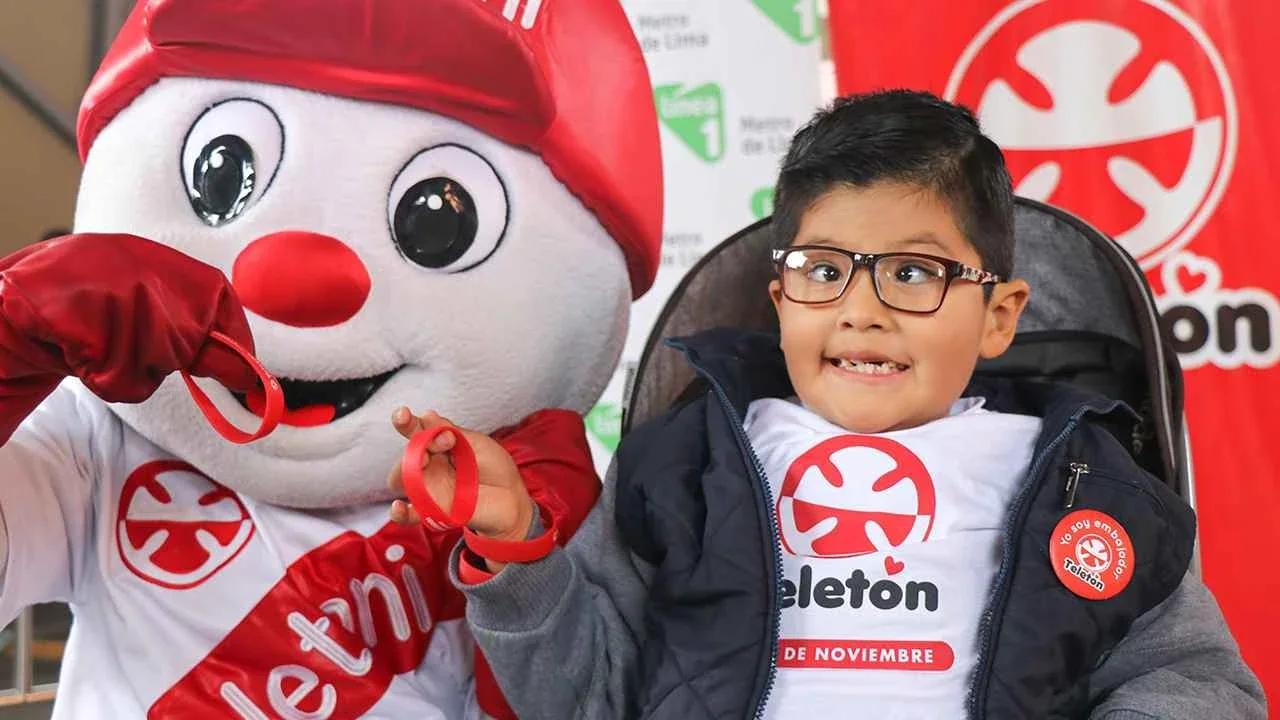
When disability is discussed in the media, the “Teletón” is one of the main reference points in Peru. Since its first programme aired in 1981, the Teletón has gained national recognition as an organisation that raises funds to finance rehabilitation programmes for children and young people with physical disabilities. In 2018 alone, more than S/14 million was raised, which the organisation states is invested directly in rehabilitation and in managing inclusion programmes.
Given the influence of television on how the Peruvian population understands disability, and the central role played by the Teletón in this representation, it is relevant to set out arguments both in favour of and against the discourse on disability communicated by the programme.
First, there is debate about the programme’s real impact on access to quality healthcare. On the one hand, it is recognised that State action currently falls short of guaranteeing effective access to rehabilitation services, even though Article 27 of Law No. 29973 establishes a duty to guarantee this right for persons with disabilities. In this respect, the Teletón responds to an existing need by providing subsidies to families of persons with disabilities who have difficulty obtaining these services. On the other hand, another view holds that, despite the support provided, shifting the focus to the “solidarity” of private entities and the general public can detach the State from its own responsibilities (Torres, 2017).
Second, there is disagreement over the justification used by the Teletón to conduct the programme and the message it conveys about the voices of persons with disabilities. One perspective argues that this part of the population is not adequately recognised by society and that this position makes it harder to achieve improvements without outside assistance. Peru still has a precarious system in terms of the structural adaptations needed to create accessible spaces, both architecturally and culturally (Guevara, 2019). From this perspective, the Teletón can be seen as a resource for persons with disabilities in efforts to address these shortcomings.
Another view, however, considers the Teletón itself to be an additional obstacle to progress for persons with disabilities. The argument is that the narrative used to persuade the public to contribute and meet fundraising targets relies on disability stereotypes. As a result, persons with disabilities may be portrayed as incapable individuals who lack the autonomy and ability to achieve their goals independently and therefore need others’ support to survive (Uribe, Duque and Córdoba, 2016). Along these lines, the Teletón’s response to political and social shortcomings focuses on integrating persons with disabilities through rehabilitation, ultimately supporting the idea that they should adapt to society rather than society adapting to them (Ferrante, 2015). Suggesting that persons with disabilities lack abilities possessed by the rest of the population and supposedly necessary for citizenship can harm them by contributing to negative representations of disability, which may, for example, make it more difficult to obtain and retain sustainable employment (Mancebo, 2015).
In addition, the UN Committee on the Rights of Persons with Disabilities (2016), in relation to Article 8 on awareness-raising, has observed that public campaigns such as telethons can perpetuate a charity-based view of persons with disabilities and contribute to the persistence of prejudice and negative stereotypes. In response, States are encouraged to work with the media to promote campaigns that portray persons with disabilities as holders of human rights rather than as people dependent on others’ assistance.
Ultimately, each person can reflect on this initiative and form their own view. Readers are therefore invited to use these considerations as a starting point for developing a position on the Teletón: a critical position grounded in the information they seek and receive, with the goal of forming a clear and well-structured opinion. What do you think about the Teletón?
Bibliographic References:
Comité sobre los Derechos de las Personas con Discapacidad. (2016). Convención sobre los derechos de las personas con discapacidad. https://acnudh.org/load/2016/05/CRPD_C_CHL_CO_1_23679_S.pdf
Fernández, M. (2010). Medios de comunicación, conformación de imagen y construcción de sentido en relación a la discapacidad. Política y Sociedad, 47(1), 105-113. https://search.proquest.com/openview/1d8413c08e2773e09323490a301bfa32/1?pq-origsite=gscholar&cbl=55462https://dialnet.unirioja.es/servlet/articulo?codigo=262542
Ferrante, C. (2015). Humillados y ofendidos. Discapacidad, limosna y dominación en el norte de Chile. XI Jornadas de Sociología. Facultad de Ciencias Sociales, Universidad de Buenos Aires, Argentina. https://digibug.ugr.es/bitstream/handle/10481/54449/TSG%20V8_N15_6%20Danel.pdf?sequence=1&isAllowed=y
Guevara, C. (2019). Parapanamericanos 2019: ¿Lima cuenta con una infraestructura inclusiva?. Retrieved from https://gestion.pe/tendencias/parapanamericanos-2019-lima-cuenta-con-una-infraestructura-inclusiva-noticia/
Leyº 29973. Ley General de la Persona con Discapacidad. El Peruano, Lima, Perú, 24 December 2012.
Mancebo, M. (2015). ¿Puede el “discapacitado” como sujeto subalterno hablar? Breve estudio crítico sobre el accionar político-colectivo en torno a la discapacidad en Uruguay. Tesis de Licenciatura en Ciencia Política. Universidad de la República, Uruguay.
Torres, D. J. (2017). El altruismo en la televisión: economía, ideología y emociones. Caso Teletón 2014. Anuario de Investigación de la Comunicación CONEICC, (XXIV), 262-275. Retrieved from http://anuario.coneicc.org.mx/index.php/AnuarioConeicc/article/view/34
Uribe, J., Duque, A., & Córdoba, L. (2016). Dificultad, solidaridad y rehabilitación: hacia una mirada crítica de los discursos sobre la discapacidad en Colombia. Siglo Cero, 47 (2), 63-77. DOI: http://dx.doi.org/10.14201/scero20164726377
Zhang, L., & Haller, B. (2013). Consuming Image: How Mass Media Impact the Identity of People with Disabilities. Communication Quarterly, 61(3), 319–334. doi:10.1080/01463373.2013.776988