

Abstract: Virtually no hearing child is deprived of access to linguistic input; in fact, preventing a child from having access to a language would be considered a serious offense. Yet deaf children are routinely and legally deprived of access to the language that is naturally accessible to them: sign language. Based on the idea that this happens because sign languages are not understood to be full languages and because there is little awareness of the serious consequences of linguistic deprivation, this article sets out why modern scientific research considers sign languages to be fully fledged languages and reviews the serious ramifications of cutting off early access to sign language (a situation recently termed “Language Deprivation Syndrome”). It is suggested that depriving a deaf child of their language should be as unlawful as doing so to a hearing child.
Keywords: Sign language, linguistic deprivation, language rights, discrimination, audism, deafness, Deaf culture
Article content.
For a long time, sign languages created by Deaf communities in different parts of the world were thought to be merely a form of mimetic communication, without the complexity of a spoken language. That impression was shattered by William Stokoe’s 1960 discovery that sign languages have the same kinds of structures and are as complex and sophisticated as spoken languages and, consequently, are capable of expressing the full range of human thought without limitation. Since then, language researchers have identified hundreds of sign languages, each of which sustains the identity and culture of the Deaf community that created it. One of them, Peruvian Sign Language (LSP), originated in Peru, where it has been officially recognized since 2010 under Law 29535.
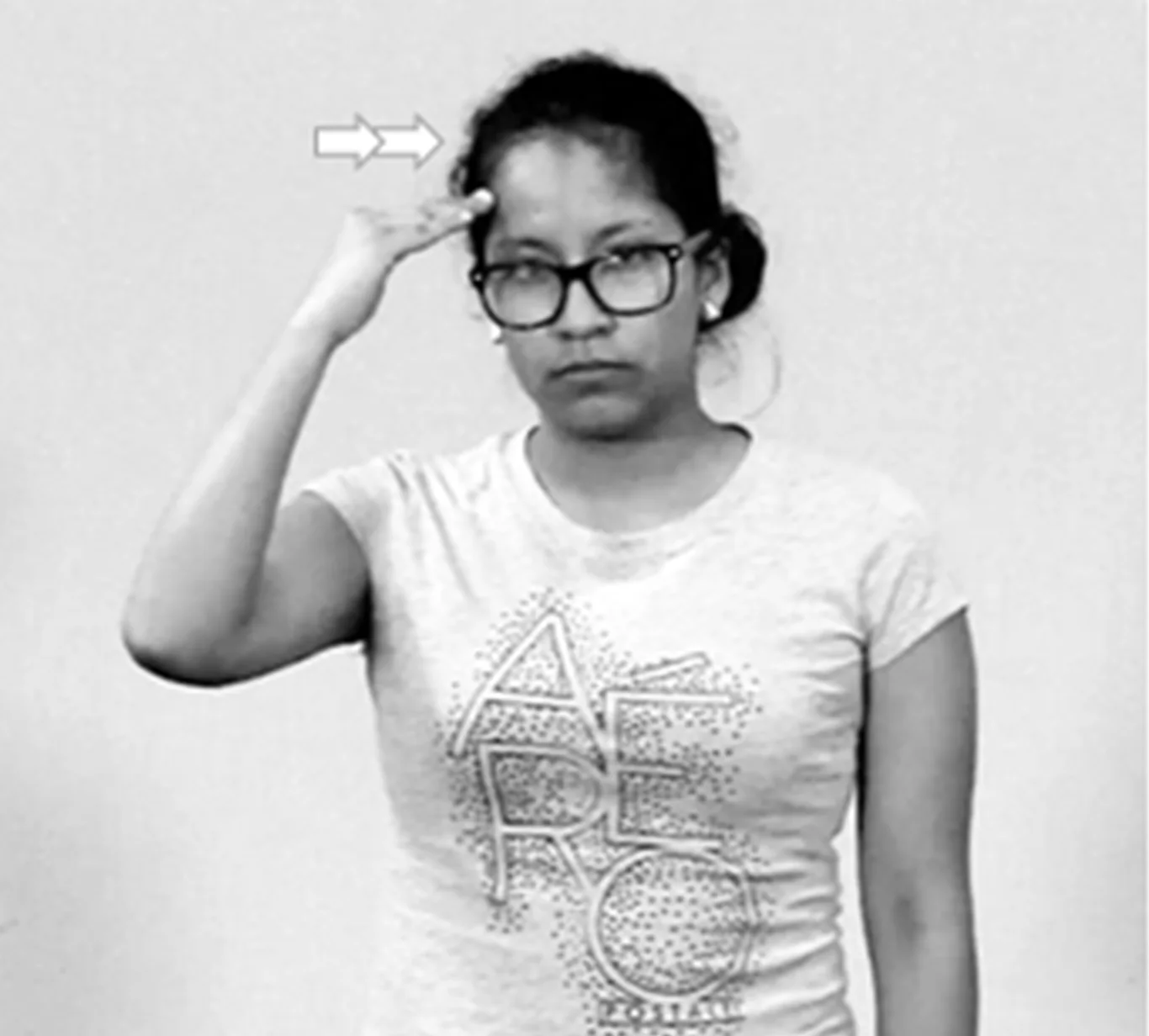
The evidence shows that sign languages are linguistically, culturally and biologically equivalent to spoken languages (Petitto 2014). First, let us consider the linguistic equivalences. Sign languages, like spoken languages, are natural creations of their communities; they are not an artificial invention (unlike, for example, Braille, which is a raised writing system, not a language), but have emerged naturally from interaction among Deaf people. As a result, they differ across the communities in which they are used: LSP, for example, differs from Argentine Sign Language and from British Sign Language, which in turn differs from American Sign Language. Users of these different languages do not understand one another automatically. Sign languages also have full grammars, with phonological, morphological, syntactic and pragmatic elements. We will discuss two examples. Spoken languages have phonemes that distinguish words; for example, in Spanish the phonemes /b/ and /g/ distinguish /bata/ and /gata/ because /b/ is articulated at the lips whereas /g/ is articulated at the velum (at the back of the palate). Likewise, in LSP the position of the hand can distinguish words; for example, KNOW and CALL differ simply because the former requires two touches at the temple and the latter at the shoulder:

We also find morphemes. For example, three words can be identified here: TEAM, FAMILY and GROUP, distinguished by the initial handshape. In all three cases, the hands make a circle perpendicular to the signer’s chest. We can identify a common root (the circular movement, meaning “group of people”) and differentiating affixes indicating what kind of group is being referred to.
 | Video link: https://www.youtube.com/watch?v=2_XZaIefFFM |
 | Video link: https://www.youtube.com/watch?v=9gTifM_B9IM |
 | Video link: https://www.youtube.com/watch?v=wszrTtzeLyk |
And, of course, we also find sentences with subjects and predicates, verbs and nouns, questions, exclamations, proper names, conditionals, and the full range of grammatical constructions. The language also has different dialects and varieties, and Deaf children born into Deaf families acquire it spontaneously from their environment.
Second, sign languages are actually used in Deaf communities, creating a culture around the corresponding sign language. Sign language is the language of Deaf people’s everyday lives: they work, dream and raise their children in it; it is the language in which they have developed broad cultural traditions, forms of humor, the same forms of art (poetry, narrative, theatre, film, dance, music…), science and research (including academic journals in sign language), journalism (newspapers and channels), extensive use of the internet, sports clubs, public speaking, and more. There are even countries such as Brazil where a Deaf person can defend an entire doctoral dissertation in Brazilian Sign Language (called LIBRAS)—see Ladd 2003 and Padden and Humphries 2005 for an overview of Deaf culture.
Third, as Petitto 2014 notes, the biological equivalence of spoken and sign languages is overwhelmingly confirmed by the discovery that the same areas of the brain control spoken expression and signed expression. This occurs across all grammatical components, including phonology. The planum temporale, a specific region within Wernicke’s area, was long considered to be associated with processing linguistic sound, but we now know that it is also activated during the use of linguistic signs. This means that the brain is not specialized in producing spoken utterances, but in constructing phonological systems—that is, in processing specific rhythmic and temporal alternation patterns that produce maximum contrast, whether using auditory or visual-gestural material. Knowledge of language, therefore, does not include the information that language must be spoken. In that sense, it is clear that signs are not a substitute for sound; they are simply one of the possible external manifestations of language. The brain does not distinguish between sound and sign when processing linguistic structures. Sign languages and spoken languages are biologically equivalent as well as linguistically and culturally equivalent.
There is therefore no reason to prevent the acquisition and development of sign languages, either at the individual or sociocultural level. Yet that is precisely what happens: the development of sign language is prevented from the birth of a Deaf child. We call this linguistic deprivation.
Linguistic deprivation is a phenomenon that occurs when a child is deprived of access to a first language. Although it is very rare among hearing children, it is very common among Deaf children. The main reason is that caregivers believe sign languages are not full languages. Hearing parents do not know what to do; naturally, they do not know sign language, which for them is a second language. Doctors, educators and psychologists often do little to help and may instead assume that the Deaf child must speak. Years can pass before parents decide to connect the Deaf child with the Deaf community. The effects of waiting too long are devastating, and worse still, they are almost invisible and are generally attributed to something else. Recent research has nevertheless identified a Language Deprivation Syndrome (LDS; Gulati 2019). It is essentially incomplete neurological development caused by the lack of early access to linguistic stimulation. These difficulties persist even into adulthood, despite decades of social interaction, when language has been absent.
LDS affects almost exclusively Deaf children because early access to a native language is the general rule throughout virtually the entire hearing community. Deaf children born into hearing families are very often deprived of linguistic input, sometimes for several years and even until adolescence or adulthood, when they are finally exposed to sign languages. Gulati 2019 reviews the characteristics of LDS, which we will note briefly here. It should be emphasized that Deaf children born into Deaf families, and who therefore have early access to a sign language, do not show this type of difficulty.
People with LDS produce linguistic utterances (when they learn to sign late) that are reduced in grammatical complexity, to the point that even other Deaf people may have difficulty recognizing the intended meaning, creating a considerable obstacle for a potential interpreter. In addition, they have difficulty with sequencing and chronology, which entails a genuine impairment in conceptualizing time. Perhaps as a consequence, they may also have difficulty understanding causal sequences. This clearly has enormous effects on everyday life—for example, as Gulati notes, it can make life feel meaningless, causing helplessness and confusion and, at best, isolation within family niches. They may also fail to recognize the need to provide conversational context to their interlocutor because of delayed mentalization, that is, the ability to recognize mental states in others and in oneself, traditionally known as Theory of Mind (ToM). The absence of a ToM is a major obstacle to fully engaging in all forms of human social interaction. This becomes evident in the way information is conveyed in conversation. Gulati 2019 gives this example:
LIVE TALL BUILDING, BROWN BUILDING
I live in the tall building, next to the brown building
This expression only makes sense if one is standing in front of those buildings, or if there is a clear directional reference, but the statement is made without context, with the expectation that the interlocutor already knows the references. People with LDS do not readily take their interlocutor’s point of view, nor do they easily accept the feedback needed to create new ideas from exchanged information. Abstract concepts are also difficult for them and they may experience learning difficulties—which is one reason deafness was long confused with intellectual disability, although it is by no means the same thing. In addition, these individuals may have difficulties with emotional regulation and externalize their feelings, effectively acting them out and translating them into disruptive behavior. This can create problematic situations in relationships with others—especially among children who have no way to express what they feel and want because they have not developed a shared language with their parents.
Finally, it is important to note that a person with LDS may have very little knowledge of facts about the surrounding world that we take for granted as common knowledge; in other words, they may have a limited fund of knowledge (Pollard 1998, cited by Hall et al. 2017) because they do not have access to the usual channels of everyday information. This can lead to situations that a hearing person might never imagine. For example, one Deaf Peruvian person I know, who saved money in a bank, believed that he had to justify and document to the bank the reason for withdrawing his own money. Another person told me that it was only as an adolescent that he discovered why his family held a party for him every year; although they faithfully celebrated his birthday, nobody had ever explained why. Another person recounts being paralyzed with fear one day when they were taken to see their grandfather in a box surrounded by many crying people; the box was then closed and taken to a place where it was placed in a hole in a wall (the wake and the cemetery: nobody had explained what was happening).[1]
In summary, Deaf people who are born into hearing families and do not have access to a sign language at an early age—that is, who experience linguistic deprivation—suffer considerable harm. Isolating a Deaf child from the language naturally accessible to them should therefore be regarded as a severe form of child abuse. Yet this abusive situation is perfectly legal and, in many cases, is even the “solution” recommended by doctors and educators despite decades of research showing how harmful it is. This must change.
References:
[1] As Gulati (2019) notes, this does not mean that a Deaf person has no useful knowledge for navigating life. On the contrary, Deaf people can be highly skilled at identifying essential features of their surroundings that help them survive (street knowledge), although this does not necessarily mean that they are fully safe.
Bibliography:
Gulati, Sanjay (2019) Language Deprivation Syndrome. En: Glickman, N. S., & Hall, W. C. (eds). Language Deprivation and Deaf Mental Health. London, England: Routledge. pp. 24-53
Hall, W. C., Levin, L. L., & Anderson, M. L. (2017). Language deprivation syndrome: a possible neurodevelopmental disorder with sociocultural origins. Social Psychiatry and Psychiatric Epidemiology, 52(6), 761-776. d
Ladd, Paddy. (2003) Understanding Deaf Culture: In Search of Deafhood. Amsterdam: De Gruyer.
Padden, Carol y Tom Humphries (2005) Inside Deaf Culture. Cambridge: Harvard University Press.
Padden, Carol y Tom Humphries (2005) Inside Deaf Culture. Cambridge: Harvard University Press.
Petitto, L.-A. (2014). Three revolutions: Language, culture, and biology. In H.-D.L. Bauman & J. J. Murray (Eds.), Dea/ Gain: Raising the stakes for human diversity (pp. 65—76). Minneapolis: University Of Minnesota Press
Pollard, R. (1998). Psychopathology. In M. Marschark & M. D. Clark (Eds.). Psychological perspectives on deafness Vol. 2. pp. 171–197. Mahwah, NJ:Lawrence Erlbaum Associates.