
Summary: The following article analyses media coverage of the Paralympic Games and the implications and narratives that arise from it. The event provides a range of benefits for the inclusion of persons with disabilities in social and sporting life, including identification and motivation for young para athletes and improvements in athletes’ psychological wellbeing. Nevertheless, comparisons between Olympic and Paralympic athletes contribute to the limited media coverage the latter receive. The media may also circulate inappropriate narratives that reinforce stereotypes and conventional notions of disability, especially a “superhuman” perspective, while focusing on athletes’ personal stories for motivational or emotional purposes rather than on their sporting abilities and performance. Readers are therefore encouraged to question the narratives they encounter in media coverage of para athletes, with the aim of challenging stereotypes while promoting participation in sport and the inclusion of persons with disabilities.
Keywords: Persons with disabilities, Paralympic Games, sport, media, social inclusion, supercrip, inspirational narratives.
Content.
The Paralympic Games originated through the work of British neurologist Ludwig Guttmann, who recognised the physiological and psychological importance of sport in rehabilitating soldiers with paraplegia following spinal-cord injuries caused by war. In 1948, Guttmann founded the Stoke Mandeville Games with two teams and a single sport: archery. Participation and the number of teams from other countries gradually expanded until the official beginning of the Paralympic Games in Rome in 1960, with more than 20 teams and 12 sports (Brittain, 2018; Rager, 2020). The Tokyo 2020 Summer Paralympic Games, held in 2021, included 22 sports and participants from more than 160 countries.
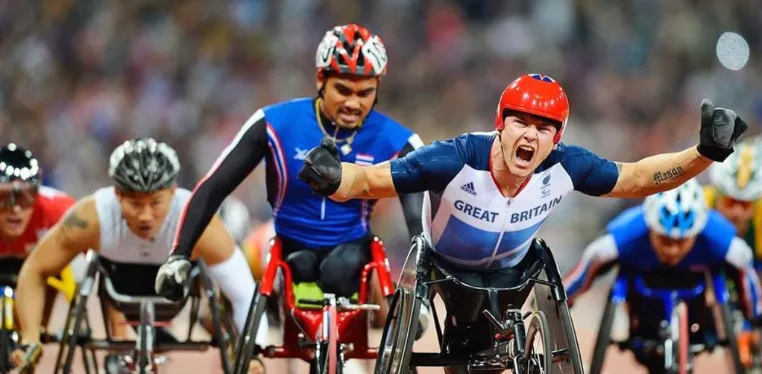
The event creates numerous opportunities for inclusion by making the accessibility of sport visible around the world. At the same time, shortcomings in media coverage can sustain an underestimated view of athletes through stereotyped narratives and other forms of representation. The way this international event is communicated still needs to be reconsidered so that it is recognised as elite sport rather than as a display of extraordinary feats.
The Paralympic Games, like other international sporting events for persons with disabilities, offer benefits for athletes and can influence the perceptions of spectators without disabilities by changing attitudes and revaluing sport. Sport promotes interaction, social cohesion and a sense of belonging; for persons with disabilities, it can foster social inclusion, reduce isolation, and improve skills, self-efficacy and self-esteem (Bantjes & Swartz, 2018).
The scale of the Paralympic Games also creates an environment that encourages persons with disabilities to participate in sport—for example, through children identifying with athletes, access to national or international competitions, and State investment in young athletes (Goh, 2020). It can therefore function as a promotional resource and an agent of change for children and adolescents with disabilities.
Nevertheless, the media may show limited interest in covering the event because para athletes are not always perceived as having the aesthetic qualities considered commercially marketable or promotable (Goh, 2020). This can produce an aesthetic hierarchy in which sponsors seek performances resembling those of Olympic athletes in terms of bodily control, speed, duration and other factors (Purdue & Howe, 2013). Comparing Paralympic and Olympic athletes in this way can devalue para athletes and their achievements by viewing them through a diminished frame.
It is also important to highlight problematic narratives about the Paralympic Games that influence the information received by audiences. The media may represent athletes through stereotypes or unrealistic portrayals, for example as superheroes or through the “supercrip” narrative, which excessively praises ordinary activities as “overcoming adversity” or treats the achievements of a person with a disability as extraordinary merely because of disability. In this way, media coverage may focus on the supposed “tragedy” of a condition and on sport as rehabilitation, rather than on para athletes’ abilities or sporting performance (Kim, 2017).
For example, the supercrip narrative was identified in coverage of the London 2012 Summer Paralympic Games, promoted through the slogan “Meet the Superhumans”. This can reinforce the notion that disability is not a social issue but rather a condition that an individual can overcome depending on personal effort (McGillivray et al., 2019), placing emphasis on emotional stories about athletes’ conditions. This narrative can also ignore unequal opportunities and accessibility barriers faced by para athletes in infrastructure, financial resources and the social conditions required to enter sport. Media messages can influence attitudes toward persons with disabilities both negatively and positively (Bantjes & Swartz, 2018), so the narratives used by information channels should be analysed and reconsidered.
In conclusion, it is essential not to be passive consumers of media coverage, but to evaluate and identify possible stereotyped narratives and discourses about persons with disabilities. Viewers should ask whether an event is being presented primarily through emotional stories of “overcoming adversity” or whether the skill of an elite athlete is being recognised. This can help avoid sustaining the problematic narratives reviewed above and redirect attention toward the positive effects of the Paralympic Games, such as promoting sport among persons with disabilities and advancing their inclusion.
As a consequence, the sporting field should be expanded and other events that receive less media attention should also be valued, such as the Special Olympics World Games, a multi-sport event for athletes with intellectual disabilities, and the Deaflympics, a longstanding international sporting event for the Deaf community.
Bibliography:
Bantjes, J., & Swartz, L. (2018). Social Inclusion Through Para sport. Physical Medicine and Rehabilitation Clinics of North America, 29(2), 409–416. doi:10.1016/j.pmr.2018.01.006
Brittain, I. (2018). Key Points in the History and Development of the Paralympic Games. The Palgrave Handbook of Paralympic Studies, 125–149. doi:10.1057/978-1-137-47901-3_7
Goh, C. (2020). To what extent does the Paralympic Games promote the integration of disabled persons into society?. Int Sports Law J 20, 36–54. https://doi.org/10.1007/s40318-020-00164-w
Cheong, G et al. (2021). An 11-country analysis of newspaper coverage of the 2016 Rio Paralympic Games, Disability & Society, 36:5, 795-811. doi: 10.1080/09687599.2020.1756746
Kim et al. (2018) Athletes with disabilities in the Paralympic Games: a framing analysis of television news. Managing Leisure 22(4):255-275. DOI:10.1080/23750472.2018.1445976
McGillivray et al. (2019). Repurposing the (Super)Crip: Media Representations of Disability at the Rio 2016 Paralympic Games. Communication & Sport 2021, Vol. 9(1) 3-32. https://doi.org/10.1177/2167479519853496
Purdue, D. & Howe, P. (2013). Who’s In and Who Is Out? Legitimate Bodies Within the Paralympic Games. Sociology of Sport Journal, 30(1), 24–40. https://doi-org.ezproxybib.pucp.edu.pe/10.1123/ssj.30.1.24
Rager, C. (2020). Paralympics. Salem Press Encyclopedia.