

Summary: At present, few studies have analyzed proposals for current intervention methods for children with ASD based on an analysis of articles. This research highlights the need to bring together and analyze articles that have investigated these proposals, so that the scope and impact of this variable within the scientific community, as well as the advances generated for the benefit of the population, can be understood more rigorously.
Keywords: Disability, Autism Spectrum Disorder, Interventions, Psychology.
1. INTRODUCTION AND TOPIC.
-
-
INTRODUCTION TO THE TOPIC.
-
Autism spectrum disorder (ASD) is a condition related to neurological development (Yamamoto, 2021). ASD generally appears during the developmental period and specifically includes difficulties in social interaction and communication, together with restricted and repetitive behaviors, interests, or activities. It is a lifelong condition that begins when a person is born and remains into old age, and each person with the condition is different from others (Narzisi et al., 2023).
It is important to emphasize that, because this study seeks to frame and understand new intervention methodologies for children with ASD, it should be noted that, following a revision of the DSM-IV in 2013, the multiaxial classification was eliminated, as was the conception of a significant number of disorders, including the condition. For this reason, the term “Asperger” is no longer used today as a separate diagnosis because it is incorporated within the diagnostic manuals (American Psychiatric Association, 2013).
The World Health Organization (WHO, 2023) reports that this issue worldwide shows an increase in prevalence over the last 20 years due to a combination of many factors. It is estimated that among children aged 18 or younger prevalence ranges from 0.62% to 0.70%, although it could reach between 1% and 2%. Economically, in North America and parts of Europe, the lifetime cost for families with a member diagnosed with the condition may range from approximately US$1.4 million in North America to US$2.4 million. Because of its growing prevalence, the need for effective, evidence-based interventions for ASD has increased exponentially (Zeidan et al., 2022).
Likewise, according to sex, males are more likely to have the condition than females; this statement is based on figures indicating that 1 in 34 children with the condition are boys and 1 in 144 are girls (Napolitano et al., 2022).
On this basis, there are different types of interventions for children with the condition (Francis et al., 2022). However, very few of them have scientific support demonstrating significant changes in communication and social relationships (Marino et al., 2022).
It is important to emphasize that the therapy with the strongest evidence of effectiveness for people with ASD is applied behavior analysis (ABA), which is often used to help children and adults with the condition manage harmful or dangerous behaviors. Therapy generally begins by identifying the unsafe behavior, learning about its triggers, and then teaching a safer alternative response.
Based on the foregoing, systematic reviews and meta-analytic studies support the effectiveness of this treatment and show, year after year, significant changes and improvements in children (Eckes et al., 2023; Yu et al., 2020).
-
-
Presentation of the problem context.
-
The problem context of the condition is reflected in North America, where, according to the CDC (2023), 1 in 54 people have the condition. In China, 10.3 per 10,000 children aged 2 to 6 have the condition; specifically, in Hong Kong, 1.68 per 1,000 nine-year-old children have the condition (Sun et al., 2019).
At the South American level, an epidemiological study conducted in Brazil reported an estimated prevalence affecting between 1.5 and 2 million Brazilian children (Sukiennik et al., 2022). In Argentina, information on cases of the condition is limited; however, one study reported a prevalence of 3.2% among children and identified that 40% of these children have the condition (Montenegro et al., 2022).
At the local level, in Peru, the Ministry of Health (MINSA, 2022) reports that nearly 16,000 people have ASD. Of these, 91% are under 11 years of age and nearly 81% of the children are male, meaning that the predominance by sex is not only global but also local.
However, according to the Office of the Ombudsperson (Defensoría del Pueblo, 2022), logistical problems affect many users and, as a result, there are no precise figures on the condition in the country. The WHO estimates that around 204,818 people may have the condition; consequently, there are insufficient specialized programs to help children achieve a better quality of life (Valdez-Maguiña & Cartolin-Príncipe, 2019).
In this regard, the literature review identifies different types of current interventions. It begins with Daniolou et al. (2022), who evaluate and improve a range of behavioral and cognitive abilities. Roberge and Crasta (2022), meanwhile, emphasize the assessment of children with ASD through sensory interventions. Another study, by Tonya et al. (2015), focuses on animal-assisted intervention to reduce symptoms.
-
-
Rationale.
-
The study is justified by the fact that there are currently few studies that have analyzed proposals for current intervention methods for children with the condition through an analysis of articles. This created a need to bring together and analyze articles that have investigated these proposals, so that the scope and impact of the variable within the scientific community, as well as the advances generated for the benefit of the population, can be understood more rigorously.
2. FRAMEWORK.
-
-
BACKGROUND.
-
INTERNATIONAL.
-
-
In Switzerland, Daniolou et al. (2022) conducted a study aimed at determining the effectiveness of early interventions for children with the condition through a systematic review. The methodology followed a systematic-review design. The sample consisted of 33 documents evaluating effectiveness in improving cognitive ability, language, and adaptive behavior among preschool children with ASD. The results identified significant outcomes from early interventions in cognitive ability (p = .02), skills within their context (p = .01), and motor skills (p = .01).
-
-
-
NATIONAL.
-
-
Benavente (2021) conducted a study whose main purpose was to analyze processes for increasing social skills in children with the condition from 2010 to 2021. The methodology followed a systematic-review design. The sample consisted of 15 documents evaluating skill acquisition among children with the condition. The results indicated that strategy acquisition depends on a series of educational conditions based on appropriate public management for children with ASD. In addition, the strategies applied have a significant effect on the child’s condition, enabling children not only to develop social skills but also behavioral and communication strategies for interacting with their environment.
3. RESEARCH METHODOLOGY.
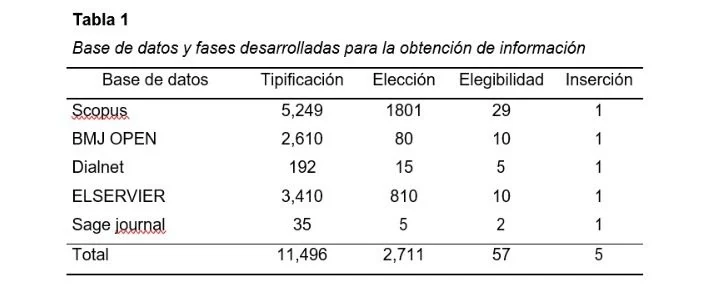
Based on the objectives proposed for the study, research was selected in English and Spanish. The literature-collection technique was structured and guided by the PRISMA methodology.
Accordingly, the studies were searched using the following terminology: “autism,” “ASD,” and “interventions.” In addition, prior studies were required to meet the preceding criteria. The English Boolean connectors “OR” and “AND” were also used to combine terms in order to locate scientific articles.
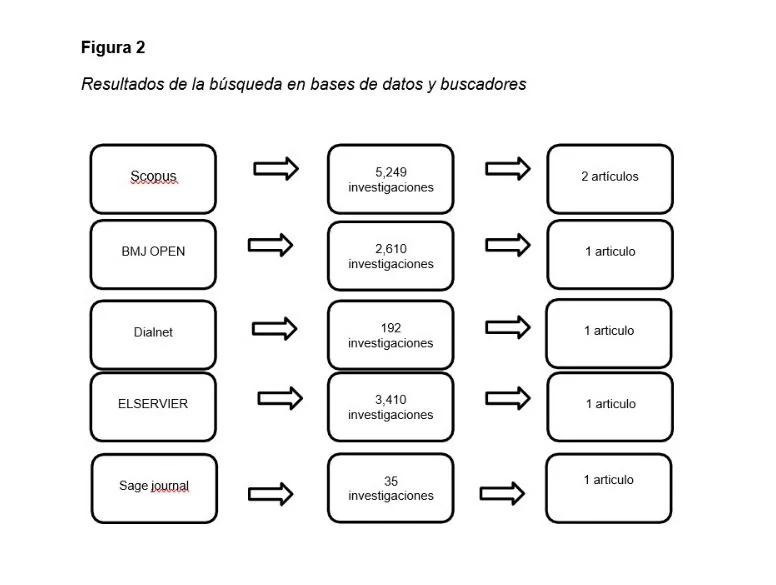
The search for relevant articles for the study was conducted in the following databases: Scopus, BMJ Open, Dialnet, Elsevier, and SAGE Journals.
The selected studies were research studies based on interventions for children with the condition. The children with ASD on whom these studies were based came from different contexts, including South America, North America, Europe, and Asia. Studies were recruited from the period 2013 to 2023, that is, publications from a ten-year range.
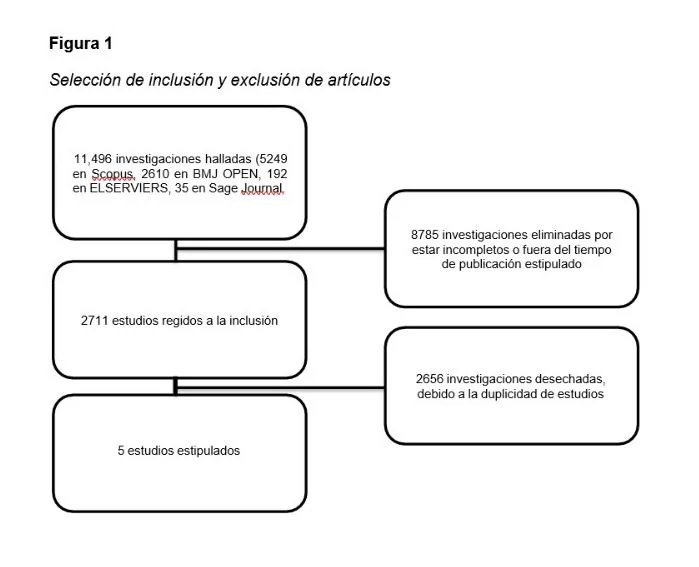
The inclusion criteria were therefore: studies published between 2013 and 2023; quantitative studies; studies evaluating children with ASD in different contexts; and peer-reviewed indexed studies. The exclusion criteria were: duplicate studies, studies not available in full, and studies whose sample did not include children with ASD.
The complete analysis of the studies is presented in the following tables.
4. MAIN RESULTS.
The results of Fulceri et al. (2023) indicate that integrated coordination among professionals also facilitates change in people with ASD, since continuous interventions and periodic redefinition of care for people with the condition are important for achieving continued improvements and outcomes. Challenges include service provision across all domains or stages of life and effective coordination among providers and health services. Solutions to ensure health, improve living and educational conditions, and promote the social and employment inclusion of people with the condition are therefore essential aspects of the approach. In summary, the main objective of an integrated care pathway is to improve quality of care by improving individual outcomes, promoting safety, increasing the satisfaction of people and caregivers, and optimizing the use of resources. Further research is needed to promote the development of clinical pathways that integrate recommendations from international consensus documents with the specific needs of people with the condition.
Pervin et al. (2022) report that different treatment modalities have currently been developed for patients with ASD. Cognitive and behavioral interventions include comprehensive treatment models and focused interventions. Comprehensive treatment models are conceptually organized practice processes that address the core deficits of ASD over an extended period in children aged 1 to 2 years. In the study of an intervention for children and adolescents with ASD, no differences were found in intervention effectiveness between high-income and middle-income countries. In summary, there is little evidence to conclude that effective interventions produce behavioral change specifically because of the treatment applied to the child. Therefore, none of the interventions can yet be considered evidence-based, since additional research and mutually agreed methodological standards are needed to provide a more secure basis for evidence-based treatments.
Yi et al. (2022) argue that the model provides significant help because the involvement of both the immediate and extended family is important when supporting a child with the condition. In this way, the child can interact appropriately as behaviors are reinforced and family members provide models for the child to imitate—models of appropriate conduct and respect for others and for oneself. Daily-living behaviors are likewise reinforced through models found within the family. In this way, the child can adequately develop skills in response to the challenges imposed by a non-inclusive world.
Rech et al. (2022) report that research to date has consisted of small studies and that study designs have often been poor. There is a tendency to overlook the well-being of people with the condition and focus on stopping certain behaviors without recognizing why they occur or that they may be useful to people with the condition. Studies found that physical activity has many benefits for people with the condition, such as increasing well-being, supporting emotional regulation, improving gait and balance, and raising activity levels. However, most studies did not analyze health and fitness outcomes and focused instead on outcomes that have not been identified as important by people with the condition.
Walsh et al. (2021) suggest that most interventions focus only on the patient and are based on participation, tolerance, and anticipating the problems that may arise. In this regard, improvements in communication with patients who have the condition emphasized the use of behavioral intervention; consequently, the outcomes of patient-centered behavioral interventions were predominantly positive. The authors argue that adapting health services to people with the condition is a priority, although only a small amount of scientific literature has considered how such interventions can be implemented effectively. Future studies involving the community of people with the condition should assess what matters to them and provide precise details about the interventions implemented. It is also important to emphasize that physical activity is effective in reducing risk and managing long-term physical and mental health conditions in this population. The health of people with the condition is, on average, poorer than that of the general population, so exercise could be particularly useful for them, although little is known in this area.
5. Conclusions and implications of the research for the population.
- It is concluded that there are different types of interventions for people with ASD. The intervention with the strongest scientific support based on significant changes is applied behavior analysis (ABA). ABA therapists use the Antecedent-Behavior-Consequence (ABC) approach to target and improve specific behaviors: the antecedent is the stimulus, such as a request, that prompts a particular behavior; the behavior is the response resulting from the stimulus; and the consequence is the response to that behavior, such as positive reinforcement.
- The second intervention with the greatest evidence is the SCERTS model, which focuses on increasing the child’s productive development within their context. Its objectives also focus on developing appropriate and effective communication between the child and their environment, so that the child can acquire skills that can be reinforced by their closest family members and by the
REFERENCES.
Bellomo, T. R., Prasad, S., Munzer, T., & Laventhal, N. (2020). The impact of the COVID-19 pandemic on children with autism spectrum disorders. Journal of Pediatric Rehabilitation Medicine, 1(3), 1–6. https://doi.org/10.3233/prm-200740
Centros para el Control y la Prevención de Enfermedades. (marzo, 2023). Autism prevalence higher, according to data from 11 ADDM communities. https://www.cdc.gov/media/releases/2023/p0323- autism.html#:~:text=One%20in%2036%20(2.8%25),1%20in%2044%20(2.3%25).
Eckes, T., Buhlmann, U., & Holling, H. (2023). Comprehensive ABA-based interventions in the treatment of children with autism spectrum disorder – a meta-analysis. BMC Psychiatry, 23(2), 133-150. https://doi.org/10.1186/s12888-022-04412-1
Daniolou, S., Pandis, N., & Znoj, H. (2022). The Efficacy of Early Interventions for Children with Autism Spectrum Disorders: A Systematic Review and Meta- Analysis. Journal of Clinical Medicine, 11(17), 5100. MDPI AG. Retrieved from http://dx.doi.org/10.3390/jcm11175100
Defensoría del Pueblo. (abril, 2022). Defensoría del pueblo advierte falta de políticas públicas para la atención a personas con autismo. https://www.defensoria.gob.pe/defensoria-del-pueblo-advierte-falta-de- politicas-publicas-para-la-atencion-a-personas-con-autismo/
Francis, G., Deniz, E., Torgerson, C., & Toseeb, U. (2022). Play-based interventions for mental health: A systematic review and meta-analysis focused on children and adolescents with autism spectrum disorder and developmental language disorder. Autism & Developmental Language Impairments, 7(2), 12-30. https://doi.org/10.1177/23969415211073118
Gitimoghaddam, M., Chichkine, N., & McArthur, L. (2022). Applied Behavior Analysis in Children and Youth with Autism Spectrum Disorders: A Scoping Review. Perspect Behav Sci, 45(3), 521–557. https://doi.org/10.1007/s40614-022-00338-x
Marino, F., Chilà, P., Failla, C., Minutoli, R., Vetrano, N., Luraschi, C., Carrozza, C., Leonardi, E., Busà, M., Genovese, S., Musotto, R., Puglisi, A., Arnao, A. A., Cardella, G., Famà, F. I., Cusimano, G., Vagni, D., Martines, P., Mendolia, G., Tartarisco, G., … Pioggia, G. (2022). Psychological interventions for children with autism during the COVID-19 pandemic through a remote behavioral skills training program. Journal of clinical medicine, 11(5), 11-24. https://doi.org/10.3390/jcm11051194
Ministerio de Salud. (abril, 2022). El 81% de personas tratadas por autismo en Perú son varones. https://www.gob.pe/institucion/minsa/noticias/27103-el-81-de-personas-tratadas-por-autismo-en-peru-son-varones
Montenegro, M. C., Bernal, E., Cukier, S., Valdez, D., Rattazzi, A., Garrido, G., Rosoli, A., Silvestre Paula, C., Garcia, R., & Montiel-Nava, C. (2022). Age of diagnosis, service access, and rights of autistic individuals in Argentina: Caregivers reports of changes and similarities across time. Frontiers in psychiatry, 13(2), 9-15. https://doi.org/10.3389/fpsyt.2022.915380
Narzisi, A., Alonso-Esteban, Y., & Alcantud-Marín, F. (2023). Autism and children: diagnosis, functional profiles and intervention. Children, 10(3), 5-22. http://dx.doi.org/10.3390/children10030522
Napolitano, A., Schiavi, S., La Rosa, P., Rossi-Espagnet, M. C., Petrillo, S., Bottino, F., Tagliente, E., Longo, D., Lupi, E., Casula, L., Valeri, G., Piemonte, F., Trezza, V., & Vicari, S. (2022). Sex differences in autism spectrum disorder: diagnostic, neurobiological, and behavioral features. Frontiers in psychiatry, 13(2), 88-95. https://doi.org/10.3389/fpsyt.2022.889636
Organización Mundial de la Salud. (marzo, 2023). Autism. https://www.who.int/news-room/fact-sheets/detail/autism-spectrum- disorders
Sukiennik, R., Marchezan, J., & Scornavacca, F. (2022). Challenges on diagnoses and assessments related to autism spectrum disorder in Brazil: a systematic review. Frontiers in Neurology, 1(2), 12-30. https://doi.org/10.3389/fneur.2021.598073
Sun, X., Allison, C., Wei, L., Matthews, F. E., Auyeung, B., Wu, Y. Y., … Brayne, C. (2019). Autism prevalence in China is comparable to Western prevalence. Molecular Autism, 10(1), 100-112. https://doi.org/10.1186/s13229-018-0246-0
Yamamoto M. (2021). How children with autism spectrum disorder perceive themselves: A narrative research. Japan journal of nursing science, 18(4), 12-42. https://doi.org/10.1111/jjns.12420
Yu, Q., Li, E., Li, L., & Liang, W. (2020). Efficacy of Interventions Based on Applied Behavior Analysis for Autism Spectrum Disorder: A Meta- Analysis. Psychiatry investigation, 17(5), 432–443. https://doi.org/10.30773/pi.2019.0229
Valdez-Maguiña, G, & Cartolin-Príncipe, R. (2019). Desafíos de la inclusión escolar del niño con autismo. Revista Médica Herediana, 30(1), 60-61. https://dx.doi.org/10.20453/rmh.v30i1.3477
Zeidan, J., Fombonne, E., & Scorah, J. (2022). Global prevalence of autism: A systematic review update. Autism Research, 1(2), 31-39. https://doi.org/10.1002/aur.2696
Zhou, H., Xu, X., Yan, W., Zou, X., Wu, L., Luo, X., Li, T., Huang, Y., Guan, H., Chen, X., Mao, M., Xia, K., Zhang, L., Li, E., Ge, X., Zhang, L., Li, C., Zhang, X., Zhou, Y., Ding, D., … LATENT-NHC Study Team (2020). Prevalence of autism spectrum disorder in China: a nationwide multi-center population- based study among children aged 6 to 12 years. Neuroscience bulletin, 36(9), 961–971. https://doi.org/10.1007/s12264-020-00530-6